Tuesday, October 15, 2013

Thomas Hobbes

1588

He was born in England and he had a pretty long live, he died when he was 91, I think that was not really usual in those times. He was son of an Anglican pastor and he spent a lot of time in the Anglican aristocracy, we had really good basis on the classics and geometry but then he got into philosophy.

With the beginning of the Civil War he refuged in France where he started his major works in philosophy, he thought the anarchy was the worst thing that can happen to a society, and that the politic should have a strong government and an authoritarian regime.

One of his most remarcable works was the Leviathan, a big water monster from the Bible which he compared to the state, that it is monstruos but still protect us from the Vemot (civil war), he also believed in sovereignty, laws and justice.

He had a realistic view so he just believed in the existence of bodies which where divided in natural and social, and the last one divided into ethics and politics

He also considered the  Life of nature a big problem for the society because it comes from the stone age where the people where primitive, solitary, poor and brutal.

The laws come from agreements between people, to keep an order and stop confronting one another and he also said that the strong people can impose to the rest, so he stated that a soberan who rules a society can't fail to the society but his decitions are not questionable, and every subdits is free, there is equality and justice.

He was also really pessimistic, he compared the man to wolves, but we can defeat the anger and our problems to live with harmony.

"Fear and I were born twins together"

Friday, October 11, 2013

Blaise Pascal

He was a really smart person, his father notice his abilities since he was little and when Pascal's mother died the whole family moved to Paris and his dad himself instruct him so he had a really good education. One of the most important influences he had was from Descartes and Montaigne.
Pascal was mathematician and philosopher, he state that the reason and faith were separate things and that God's nature is beyond our ability to understand so we are not able to prove his existence.
Pascal died when he was 39 years old, he was often really sick and he was closed to die several times.

His major writing was Pensees or thoughts and one of his more remarkable theories was Pascal Wager where he stated that it is safer to believe in the existence of God in case he does exist; if you believe in him and he does exist you'll be eternally rewarded and if he doesn't, is not that bad.

He made really important contributions to Math (now a days used in gambling), in the probability theory and he created an hydraulic press


Tuesday, October 8, 2013

Baruch Spinoza

Spinoza was a merchant who lived in Amsterdam, his family had a firm that imported dried fruits; but the business had very poor conditions.
Spinoza was excommunicated from the people of Israel, he used to be a jew, but the reason of his excommunication are not very clear.
The causes are considered to be his radical ideas, but we can't really tell how true this is.

His great philosophical pieces were The Ethics and the Theological-Political Treatise which were pretty scandalous for the decades.

One of his most famous ideas is his conception of God, and it is very different from the traditional God, and he called it "god of nature", this god does not creates plans, commands or judgements, and he also said, "there is only nature and its power", in this point he differs with many different philosophers like Aristotle whit believed in God as an spirit, perfect and pure. He also thinks there is not such thing as nature creation, he believed that nature was always there and it will always be there and he also said there is no thing as miracles, it is al superstition.

He didn't believe in Contingency neither, all our choices and actions are part of nature just as the plants and the rocks are. And if we think that god is just like us we will live waiting for eternal reward or with fear from eternal punishment.

He believed that religion was just a meaningless and empty practice and that the only "True Religion" was "Love your fellow human beings and treat them with justice and charity" and he considered everything else as superstition just as he considered afterlife, when you are dead you are dead

Spinoza denied that the Bible had a divine origin, neither the Pentateuch or any prophetic writings, he said there where just written by humans and that they are a collection of writings composed in different times from different people so we have a "corrupted and mutilated document"

So everything he believed in we can considered it heresy, at the end he stop believing on the jewish religion and his points of view where not really accepted from other people on the society, but he considered himself innocent and he just accepted his new destiny as excommunicated.

Sunday, September 29, 2013

Richard Dawkins

During his interview they talk about different important topics that usually caused some controversy within the society, for example the comparison between brains and computers it's pretty cool, I never thought about it before but I kind of agree with it, he said that in computers there's a programmer and in brains the programmer is natural selection, and it's true actually, our bodies reprogram every time we need them to.
Another thing could be that he does believe in determinism, that our bodies just like computers work and program based on existing conditions, and it's kind of like true, bodies don't change based on free will, it will sometimes just happen.
What I didn't understand at all was the device thing, he created it to record animal behavior, and to transfer it directly into the computer instead of doing all the transcription work, and it works with a software based on small different sounds that will be decoded, but how can the device actually recognize the behavior how is it build??
Then he talks about the most misunderstood aspect of human evolution, and he says that it is that people see a living being and they think that they exist from causality, but that's all wrong because they obviously don;t exist due to random circumstances, and there's where the natural selection is the best answer to solve this problem; so I think this non-random force is God, because he is the one who created all the living things on earth, and based on his work, or like the genetic code is where the changes come from.
When they talk about religion, Richard Dawkins says, although he was born in an anglican culture, and he use to believe in it too, he also said that as human beings there is a predisposition to believe or have a religion in the culture, and it is know as a psychological predisposition which is pretty normal, there's a religion found in every culture, even the ancient cultures.
At the end of the interview the talk about Darwin's theory of evolution and how important or remarkable it is, and I do agree on his conclusions, it is a simple explanation for a really complex idea or process, and it is really weird that nobody had come to it before, even thought there where a lot of pretty smart philosophers on ancient years, and we did not accept it at all until the 9th century, funny isn't it?

Thursday, September 19, 2013

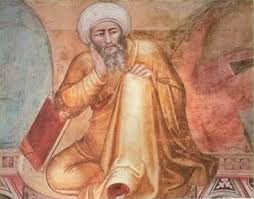
Averroës

According to Immanuel Kant philosophy forms part of human life since we are little children, we always ask ourselves and other about what's going on around us but that doesn't necessarily means that we will always study philosophy it is know that we are not really finding philosophy studies previous to college or outside a Catholic Church, but studies had find in Morocco that almost everyone has at least the basic knowledge of what philosophy is.

Philosophy was mainly studied in Ancient Greece but then it faded away in an era know as the "Dark Ages",until some philosophical movements where they reemerge all around the world.

During the enlightenment and the rise of modern sciences the study of philosophy mainly took place in Islamic cultures, who wanted to recovered these old traditions, making Baghdad the intellectual center during the medieval world.

Averroës who developed close ties with Almohad caliphs became an influential religious judge and physician, he devoted much of his scholarly efforts to a series of commentaries on Aristotle. The most interesting thing about Averroës was although he was a muslim he had little influence on the medieval world, his works survived only in Latin and Hebrew translations. He mixed philosophy with religion and promoted logic as key to true understanding of religion.

Points of view:
1)The world has always existed
2)Souls will survive, but will never return to the same bodies
3)intellect and soul are separate

He affirms that there should not be conflict between philosophy and faith, but he accepts not everyone should question religion as philosophy demands.

Because in great Muslim Universities was no place for philosophy because they were mainly religion Averroës ideas were't important for them, however thanks to his ideologies many universities in the western world make philosophy part of their program.


Monday, September 9, 2013

Epicurean


1) I stayed at home the whole weekend to study and practice for my calculus exam 
2) My mom goes to her room to watch some TV
3) My dad sits on the coach every evening and takes a nap
4) I play some music on the car when I drive to school (or everywhere I go)
5) My sister goes to her room to read a new book she just got
6) By brother spends his afternoon playing on his x-box
7) I call my dad on the afternoons to ask how everything is going on work
Me and my friends go to a sushi restaurant to talk about everything and anything
9) The girl went to the movies to enjoy a movie by herself
10) I went for a walk after my exam to relax 
11) My dad sits on the living room and plays cards on his computer
12) A friend bakes muffins at home 
13) My dad rides bicycle on weekends to do some sports
14) I call my best friend who’s living in Aguascalientes just to keep in touch
15) We go to Starbucks on school breaks to buy some tea or coffee
16) The woman goes with her children to the church
17) My sister takes the dog for a walk
18) My brother walks with his friends to the mall or the park
19) My sister dances ballet every afternoon

20) I watched a movie with my family every weekend

Tuesday, September 3, 2013

Aristotle (384-322 ac)


He was son of a doctor in Macedonian court, when he assisted to Athens academy he was disciple from Plato for 20 years until he decided to separate form Plato’s teachings saying that he was a friend of Plato but he was more friend of the truth that’s when he created his own philosophy, Aristotle was realist he believed that the concepts and ideas are present in the world, and that based on the existence of individuals and objects, our mind creates the concepts, which show our capacity of thinking on the diversity of the world, ideas are fictitious, there only exist individuals.
In 344 Filipe of Macedonia calls him and names him preceptor from his son Alexander the great,; with Alexander’s help he created the lyceum where he dedicated to the study of physics, biology, ethics, politics, etc. Then he created a big library and a zoo with money from the court.
Aristotle said that the man was a rational and politic, we are rational because we are capable to think and reflect about our actions and surprise about them, and this is considered to be the basis of philosophy, to be surprise of things and then ask ourselves about it, but we are politic because we have to live in civilizations or cities, nobody is able to live alone we have to share a language and our life with somebody else.
Aristotle also created the first classification of science; productive science, which consists on beautiful and useful objects; practical science which where mainly ethics and politics and the theory science which were about knowledge that then turned into metaphysics. 
He believed in the empirical knowledge of nature, which comes from observing and from life experiences, Aristotle is known as one of the first Scientifics he used to prove his theories based on observation and making experiments. He also said that change was really important, it was the process of being a potential to an act, for example the seed of a tree is in potential a tree, because even though it will become a tree with time or like chairs, you can have an old one, a new one, some color chairs, and in every shape but they will still be chairs.
Aristotle also created a new are of study, the ethics, everything starts on customs and personality of the individuals, and in conclusion everything is an instrument to find or achieve our goals but beyond that everyone is searching happiness. In few words ethics is the study of human action in a pursuit of happiness, and freedom but we have to develop virtues, which give us the strength to avoid weakness. We have to practice them and always pay attention to those who we considered excellent in their virtues and make from ourselves virtuous individuals.